
 English
 日本語
日本語
 한국어
한국어
 عربي
عربي
 اوردو
اوردو
 中文
中文
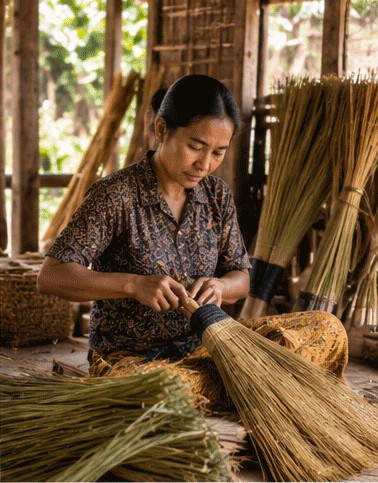


Sustainability in Natural Product Manufacturing
Sustainability at Junlang Natural begins with the materials themselves. Natural plant resources are sourced from different regions of Indonesia and developed into practical products through material selection, product development and professional manufacturing.
A responsible approach considers the entire product journey, from the origin of raw materials to processing, manufacturing, packaging and international supply.
01 — Responsible Natural Material Sourcing
Understanding Where Materials Come From
Indonesia provides a diverse range of natural plant materials with different characteristics, harvesting conditions and regional availability.
Junlang Natural works with multiple sourcing regions rather than relying entirely on a single origin. This approach provides access to a broader material base while allowing each material to be evaluated according to its characteristics, availability and intended application.
Natural materials currently used across the product portfolio include Rayung, Sawit, Kelapa, Nipa, Lontar, Tulang, Ijuk and Palam.
Responsible sourcing starts with understanding the material, its origin and the conditions under which it enters the supply chain.
02 — Making Better Use of Natural Resources
From Raw Materials to Useful Products
Sustainability is not only about choosing natural materials. It is also about making effective use of the resources that enter the production process.
Different plant materials have different fiber structures, densities, lengths, textures and processing characteristics. Understanding these properties helps determine which materials are suitable for specific products and applications.
Better material selection can support more efficient product development while helping natural resources create greater value through practical, long-lasting product applications.
03 — Connecting Traditional Knowledge with Modern Manufacturing
Preserving Craftsmanship Through Product Development
Natural broom making has developed through generations of practical knowledge. Material selection, fiber arrangement, binding techniques and product construction all influence the final result.
Modern OEM manufacturing adds structured production management, quality inspection, product specifications and packaging requirements to this traditional knowledge.
The goal is to preserve the natural character and craftsmanship of plant-based products while making them more suitable for modern international markets.
04 — Sustainability Through Product Development
Designing Products Around Real Applications
A sustainable product should also provide practical value.
Product development considers the intended application, material characteristics, construction, usability, packaging and target market. This approach helps avoid treating every natural material or broom as a standardized product.
Natural brooms can be developed for household, commercial, hospitality, outdoor, agricultural and other cleaning applications according to specific market requirements.
05 — Responsible Manufacturing and Quality Management
Quality Supports Longer Product Use
Professional manufacturing plays an important role in responsible product development.
Material preparation, production processes, assembly, binding, finishing and quality inspection are managed according to product requirements. Consistent specifications help reduce unnecessary quality problems and support repeat orders.
For OEM and private-label customers, clear product specifications also provide a stronger foundation for long-term supply planning.
06 — Building a More Responsible Supply Chain
From Indonesian Origins to Global Markets
A natural product connects multiple parts of a supply chain, including material suppliers, harvesting communities, processors, manufacturers, packaging operations and international buyers.
A multi-origin sourcing network provides greater flexibility in material supply while supporting a broader understanding of Indonesian natural resources.
Long-term supplier relationships, clear communication and organized production processes help create a more stable foundation for international natural-product supply.
07 — Sustainability for OEM & Private-Label Brands
Developing Natural Products for Global Markets
Sustainability is increasingly becoming part of product positioning for retailers, distributors and private-label brands.
Junlang Natural supports OEM and ODM projects involving natural brooms and other natural-material products. Product development can consider material selection, product structure, packaging and intended market requirements from the beginning of the project.
This allows sustainability considerations to become part of product development rather than an isolated marketing concept.
08 — A Long-Term Approach
Natural Resources. Practical Products. Responsible Growth.
Sustainability is viewed as a continuous process of understanding materials, improving manufacturing, developing useful products and building stronger supply relationships.
The long-term direction is to create greater value from Indonesian natural resources while connecting responsible sourcing and professional manufacturing with the needs of global B2B markets.
markets.











